Smokies Fast Trip Facts:
Target: Wild Rainbows, Browns, and Native Brook Trout.
Season: Year-round (Peak: April–June & Oct–Nov).
Experience: Beginner to Advanced (Instruction-focused).
Includes: Rods, reels, waders, flies, and lunch (full day).
What to Expect on a Guided Smoky Mountain Fly Fishing Trip
The Great Smoky Mountains National Park offers over 800 miles of wild trout water, but navigating these technical streams can be a challenge for even seasoned anglers. As your Smoky Mountain fly fishing guide, I specialize in teaching the stealth and precision required to catch native Southern Appalachian brook trout, vibrant rainbows, and trophy-sized browns. Whether you are a beginner looking to cast your first fly or an expert seeking the solitude of the backcountry, our Great Smoky Mountains fly fishing trips are designed to make you a more successful angler.
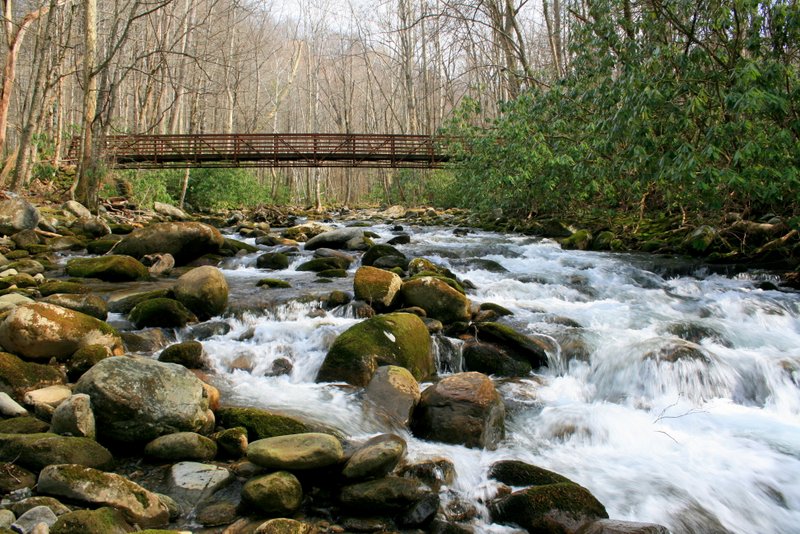
Many first time anglers to the Smokies find themselves frustrated by the endless conflicting currents that make good drifts difficult. Hiring a guide to fish in the Great Smoky Mountains can pay dividends down the road. Our passion is sharing our love of fly fishing the Smokies for wild trout with Park visitors. Regardless of your skill level, we are certain that a day spent with one of our fly fishing guides will make you a better angler and help you start catching more trout in the Great Smoky Mountains. Many visitors book a guide trip each time they visit. These anglers recognize that the casual visitor will find far fewer fish than a local guide who is on the water every day.
More information on guided fly fishing can be found here or feel free to email me for more information at TroutZoneAnglers@gmail.com. Information on rates for guided fly fishing trips can be found here.
Fly Fishing the Smokies On Your Own
There is a wealth of information at the Trout Zone as well as here in the Smoky Mountain Streams and Techniques sections for those who prefer the DIY route. Little River Outfitters in Townsend, TN is a great source for gear and advice on fishing in the mountains. This excellent fly shop offers superior customer service and sweetens the deal even further by offering free shipping on all orders. Also, they carry just about any brand of gear and equipment you might want to buy. The fly shop also has a very good fly tying department. Finally, they can usually special order hard to find items. Learn about Park specific regulations and license requirements HERE.
The DIY Trap: Why 90% of Smokies Anglers Get Skunked.
Many anglers don’t realize how unique our fisheries our. One of the most common trip requests that we receive goes something like this. “Hey, I’m in town for a few days and have been out fishing. So far I’m having a tough time finding fish. The guys at Little River Outfitters in Townsend recommended that I call you to see if you happen to have any guides available. I know it’s last minute, but are you able to help?”
Most of these anglers end up disappointed. Our guides regularly book months in advance. However, schedules change and we sometimes get late cancellations, so it is always worth asking. The easy solution, of course, is to just plan on hiring a guide before you get here and get frustrated. Catching fish in the Smokies really isn’t difficult, but it does take some local knowledge. The guides at Trout Zone Anglers enjoy sharing these streams with visitors.
The Smokies: America’s Favorite National Park
The Great Smoky Mountains National Park is the finest wilderness area in the southeastern United States. This Park is the most visited National Park in the United States. Despite the high number of visitors, a true backcountry experience is just a short walk away. Most visitors to the Park never leave the black top.
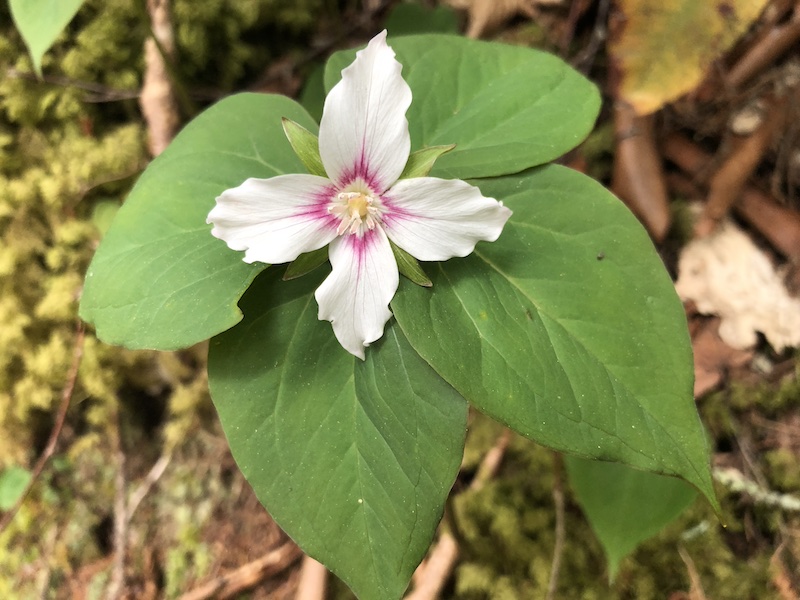
In addition to fly fishing, the Great Smoky Mountains National Park offers myriad activities ranging from hiking to auto touring. The warmer months bring a wealth of wildflowers starting in the early spring. Visitors from around the country travel to the Smokies for the spring wildflower season. The rhododendron, mountain laurel, and flame azaleas bloom later in spring and summer. Camping and backpacking are also very popular activities. Excellent hiking is available within the Park and is one of the most popular things to do. Around 800 miles of trail makes backcountry camping and fishing easy to accomplish. Fishing is good throughout the Park but gets even better the farther you get from civilization.
Plan Your Trip: Best Times to Fish and Where to Stay
The Great Smoky Mountains National Park is surrounded by mostly undeveloped land. The communities of Bryson City NC, Cherokee NC, Gatlinburg TN, and Townsend TN offer the best options for lodging and other visitor services. If you are an angler or nature lover, I recommend avoiding Cherokee and Gatlinburg. Both cities are more geared to thrill-seeking tourists looking for a city experience. Townsend is the best option on the Tennessee side of the Park. This small town carries the well-deserved nickname of the “Peaceful Side of the Smokies.” Finally, a good option on the North Carolina side of the Smokies is Bryson City. Here you can find a small town atmosphere with some great places to eat and shop.
The Best fishing in the Smokies is generally from spring through fall. Winter can produce some special moments, but is generally a tougher time of year. If you have specific fishing experiences you are looking for, then contact me (David Knapp) and I can make recommendations specific to what you are looking for. In general, spring offers the best (read easiest) fishing of the year while summer offers prime brook trout fishing. Fall can be good as well, especially if you enjoy the autumn colors like I do. Our professional guides at Trout Zone Anglers know where to go no matter the season to have a great day on the water.
The Waters You’ll Fish With Your Great Smoky Mountains Fly Fishing Guide
Our guides cover the entire Park, but specialize in fishing on the Tennessee side of the Park. In particular, we serve primarily as Townsend and Gatlinburg Tennessee fishing guides. This is because that is where most of our customers stay when visiting the area. We also fish the Oconaluftee River system on the North Carolina side of the Park regularly. This may be ideal for customers staying in Cherokee or Bryson City North Carolina.
The most famous stream we guide on is probably Little River. We also fish Abrams Creek, the West Prong of the Little Pigeon, the Middle Prong of the Little Pigeon, Cosby Creek, and Big Creek. Our favorite brook trout streams are often small tributaries of those larger stream systems. On the North Carolina side of the Park, we also fish all of the streams. However, the majority of our time is spent on the Oconaluftee River and its tributaries as well as Cataloochee Valley for our guided trips. If you are interested in guided trips on other streams, feel free to contact me for more information and to discuss the possibility.
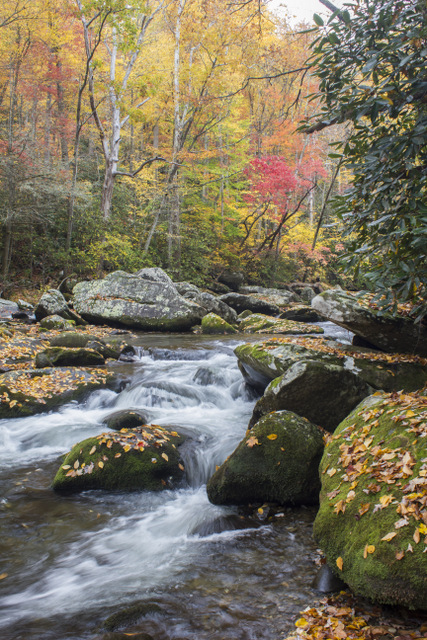
Hiking Will Usually Produce More Success
The Park has over 800 miles of fishable water. If an easy day of fishing close to the car is what you want, we will probably fish on Little River or the Middle Prong. If you are willing to walk, some of our favorite places are well into the backcountry. As a general rule, the fishing gets better the farther you walk. We understand that some people cannot walk far for various reasons, but for those who can, a long walk can offer the trip of a lifetime. There is even a good spring creek here in the Smokies. As with most spring creeks, this one is technical and full of very spooky trout.
As longtime Great Smoky Mountains fly fishing guides, we know these streams and know how to find trout. We consider these streams our home waters and spend more time here than anywhere else. This is where we learned to fly fish and is our favorite place to guide.
Target Species: Native Brookies, Wild Rainbows, and Trophy Browns
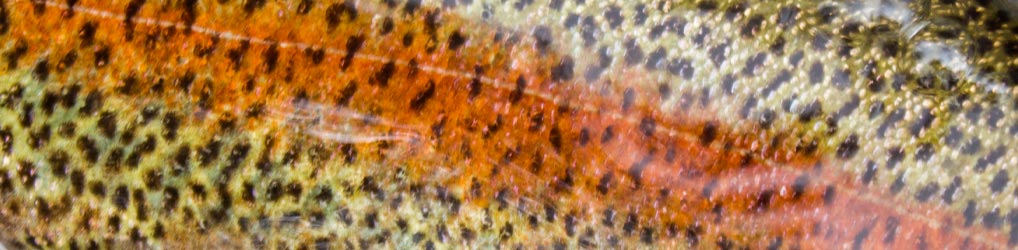
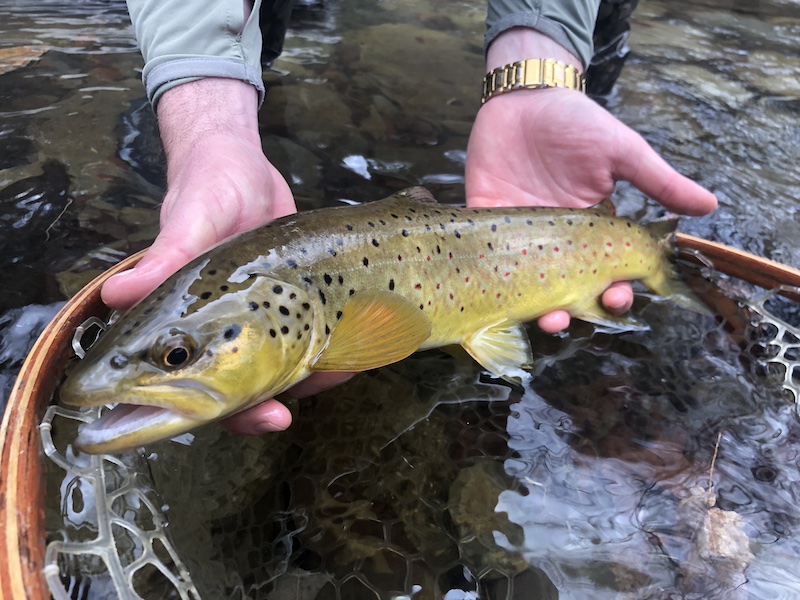
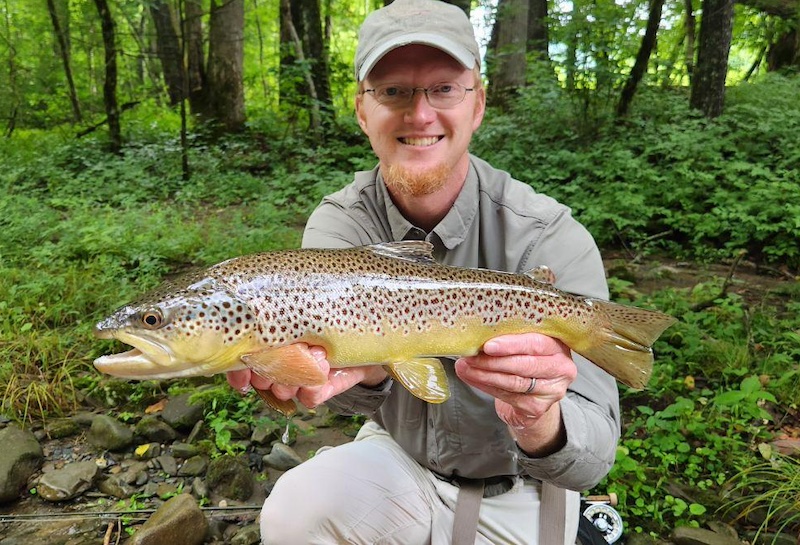
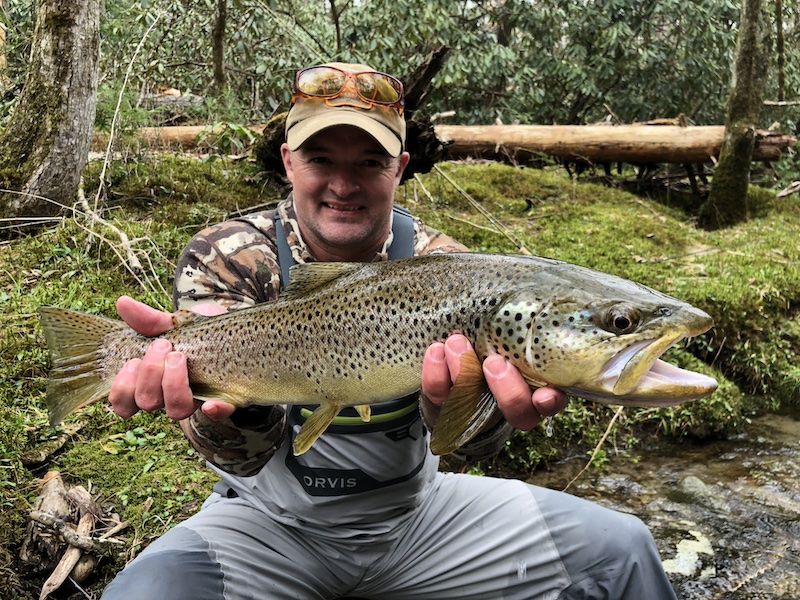
In the Great Smoky Mountains National Park, there are three species of fish that we regularly target. There are wild rainbow and brown trout in abundance. The rainbows average 5-9 inches or so in length. A large wild rainbow trout in the Park might stretch the tape to 14 or 15 inches. Rainbow trout are greatly appreciated by any Great Smoky Mountains fly fishing guide because they provide good consistent action. That said, the wild brown trout might be our favorite target. These fish average a little larger than the rainbows at 6-12 inches. Occasional trophy sized fish can approach 30 inches and fish over 20 inches are just common enough to encounter a handful each season.
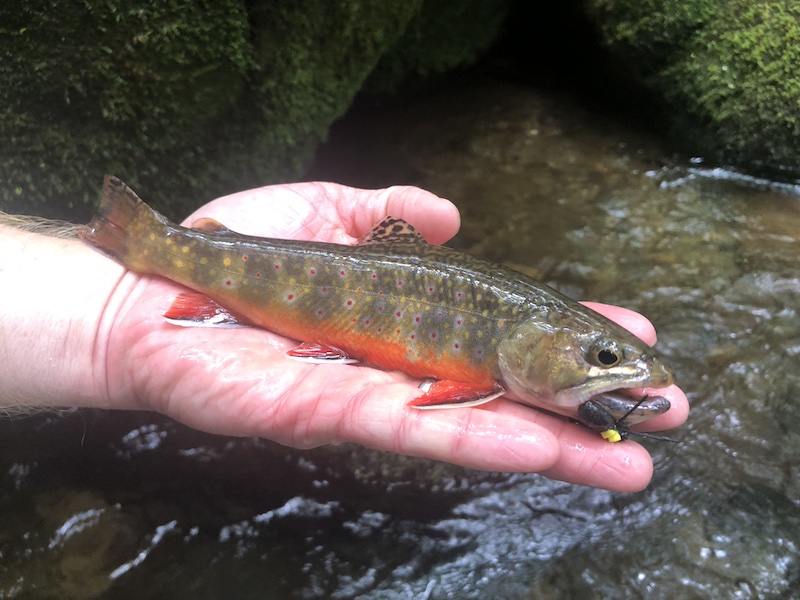
The Char You’ll Catch in the Smokies
If browns are our favorite trout, then southern strain brook trout are our favorite char. Not technically a true trout, brook trout are the only native salmonid in the Great Smoky Mountains National Park. Thus, they have a special place in the ecosystem and the hearts of many visiting Park anglers.
Any good Great Smoky Mountains fly fishing guide loves brook trout because of their willingness to take a dry fly. A trip to the Smokies to catch these special native brook trout should be on every angler’s bucket list. Fishing for these gems is best on backcountry trips that require a hike before starting to fish. That said, for anglers unable to walk far, there are some select roadside locations where we can target these fish. Please be advised, however, that fishing roadside will not provide the same consistent action as trips deep into the backcountry or into other more inaccessible areas.
Master the Technical Streams of the Smokies
Anglers who try to figure out fishing in the Park on their own usually go through a lot of frustration and fishless days. A Great Smoky Mountains fly fishing guide will help shorten the learning curve. We offer professionally guided trips and any necessary gear to help you get out on the water and catching fish. Anglers of all ability levels will benefit from a day on the water with one of our guides learning to high stick or tight-line nymph.
One of the most important things about our guides is our experience guiding on Smoky Mountain streams. We are full time professional guides, not a college student doing a summer job. David Knapp began Trout Zone Anglers in 2014 and has guided full time ever since. This year is his 13th season guiding and David has been fly fishing in the Smokies for well over 30 years. The rest of the TZA crew likewise has a ton of experience and years fly fishing in the Smokies and it shows. Fly fishing in the Smoky Mountains is easier with experienced guides.
How We Help You Improve As An Angler
One of the things that many visiting anglers struggle with are the subtle hits when nymphing. Having an experienced guide there to tell you where to cast and especially when to set will help your catch rate improve drastically. Many anglers also struggle with reading the water. As guides who focus on teaching, we will help you understand why the fish are where they are. Every moment is a learning opportunity. We believe that a day spent with a guide should help you become a better angler. Our primary objective is to help you accomplish this goal while having a good time in a relaxing environment. From dry fly presentations to effectively utilizing nymphs, our guides will get you catching fish quickly.
Teaching is not just what we do, but it is who we are. David Knapp is a high school math teacher by education and recently completed a masters in outdoor education. Throughout your guided trip, we are always alert for learning opportunities and make it a point to highlight these moments as they come up. We focus both on what you are doing well, and also help you work on areas that you can improve. At the end of the day, we believe that you will be a better angler for having fished with us. Fly fishing the Smokies can be easy, and we hope to help you make it that way!
Preparing For Your Experience With Us
Clear communication up front will help you have the best possible day of guided fly fishing. Providing us with information up front will help us plan the perfect guided fly fishing trip for you. If you want to know what to bring with you on your guided trip, then read this page. One of the most important things you can bring is all of the questions you always wanted answered.
Be honest with your guide about your skill level. Also, we will need to know if you have any dietary restrictions if you are taking a full day trip. Tell us if you need to use our wading gear and other equipment. If you plan on renting our wading gear, we will need to have your approximate sizing information ahead of time. This will help us make sure that we have something that will fit. Shoe size and approximate height and weight will help us get the right fit.
Your Smoky Mountain Fishing Guide is Prepared
Normally, a day of fly fishing with us starts the night before. This is when we make sure that all of our fly boxes are in order. New flies are tied to replace any we lost on that day’s guided trip, and food is purchased for the next day. A fly fishing guide is always looking for ways to improve at his or her craft. Thus, we might even be tying up a new fly pattern if inspiration has struck during the day. Bedtime often comes late, but you will still find us up at 5:00 am or even earlier the next morning.
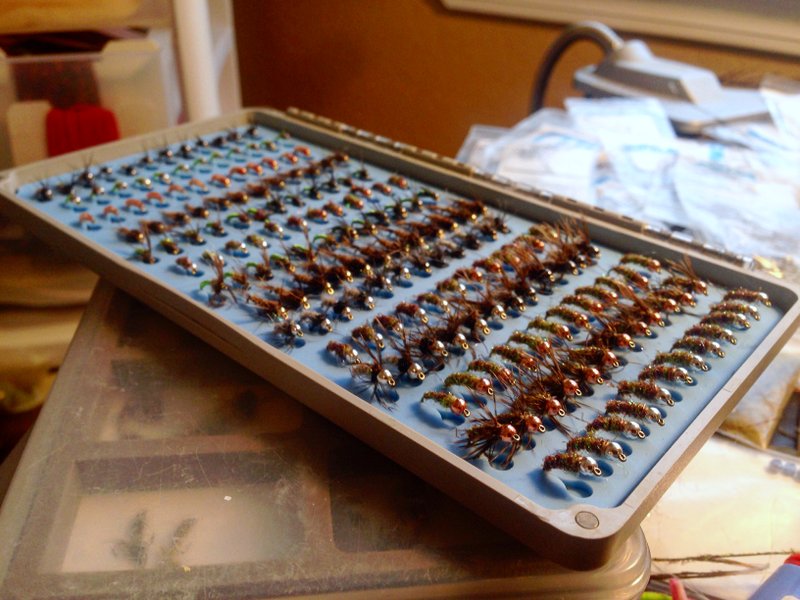
Starting a day of guiding begins with packing the cooler. No trip is complete without plenty of cold drinks (we normally have water and Gatorade). We also provide a good lunch if a full day trip is on the books. Everyone loves our lunches. Some people specifically ask if they are getting the same good lunch as last time when rebooking. More on that in a minute!
After packing the cooler, we double check all of our gear. This includes rods, reels, flies, leaders, tippet, and all of the other odds and ends that make up a good day of fly fishing. Waders and boots are packed if we are providing those for that day’s clients. Driving to our designated meeting spot, we are thinking about strategy for the day. This might include where to fish and what flies should be working.
Example of a Guided Trip With Us
We like to meet clients at places like Little River Outfitters or perhaps Sugarlands Visitor Center. Due to increasing costs associated with insurance requirements from the National Park Service, we ask that you follow us in your own vehicle. Then we will hit the road for a short but scenic drive to the stream of choice. Along the way, we may see deer, turkey, or black bear. Once we arrive stream side, we’ll begin assessing your strengths and weaknesses as anglers through our conversation. This helps us customize the day to fit your needs. Stealth is very important, and physical ability can greatly enhance or slow this important aspect of fishing in the Smokies. Communicate any limitations up front and that will help us to still plan a fun and successful day.
Example of a Trip With Us: The Fishing
Our favorite fishing usually involves hiking in to reach less pressured water. A good fly fishing guide should know which streams are fishing the best. Because we are on the water every day, we know where to go and which streams are worth our time. Much of this comes from many years of experience, but also it comes from being on the water every day. Once we hike in or drive to our fishing spot, we will rig up rods. Then we’ll discuss fly selection for success in the Smokies. In the warm months, this might include a dry fly with a bead head nymph as a dropper. Often, however, you will find us gravitating towards a nymph rig complete with a strike indicator. Trout of the Smokies are most likely to rise during a hatch. Otherwise, they will often stay deep in the streams each day.
Example of a Trip With Us: The Catching
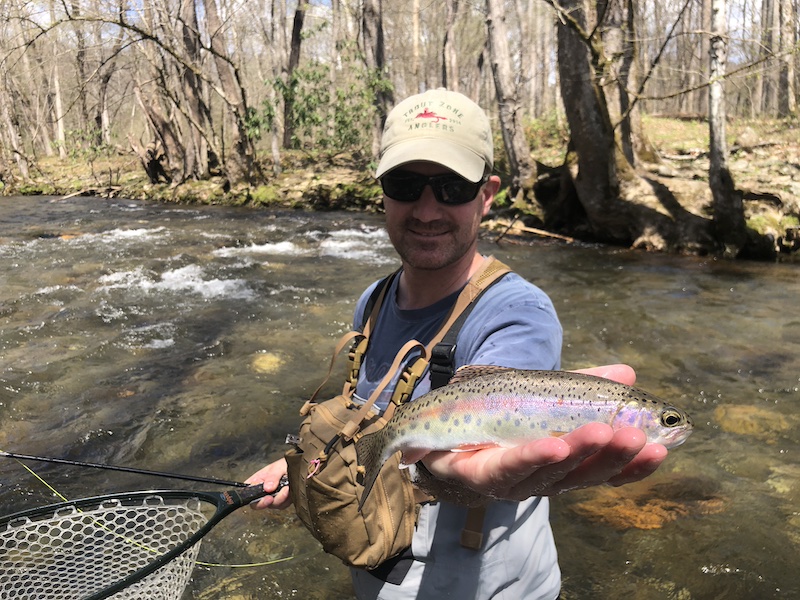
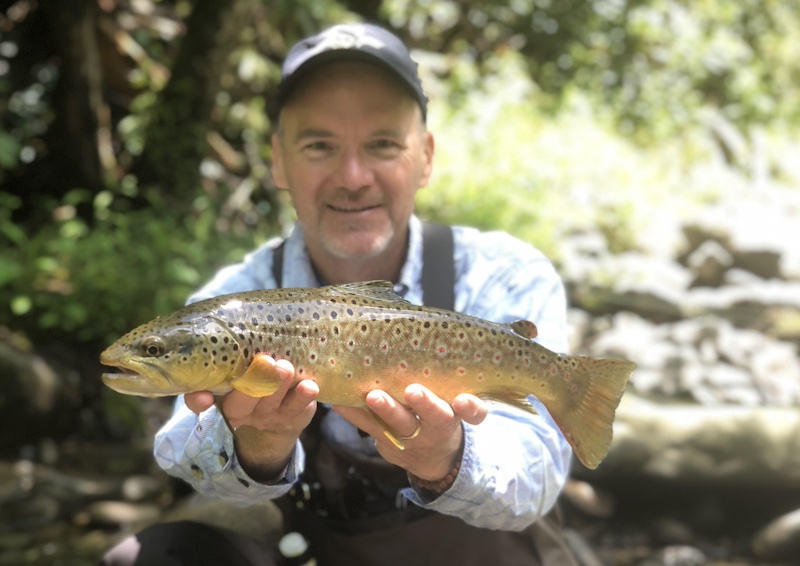
Depending on our stream of choice, you will be catching rainbow, brown, and/or brook trout. These are all wild fish and are beautifully colored. Each one is a jewel. Because we fish the same waters throughout the year, we practice catch and release. Please understand that if we allowed people to keep fish, our techniques are so good that the streams would soon become depleted of fish. Then we could not provide the same level of fish catching fun on our trips. That said, we usually have a cellphone or camera along and are happy to take some pictures of you with your catch. These pictures make for great memories of your day on the water with your Smokies fly fishing guide.
Example of a Trip With Us: Lunch
If you have booked a full day trip, we provide lunch. We are happy to cater to specific dietary requirements and these should be communicated at the time of booking. A normal lunch will include things such as a scrumptious sandwich, chips, cookies, apples, and if you are lucky, my famous Greek style pasta salad. After lunch, some anglers actually struggle because of all the good food they just ate! When people start getting a bit tired in mid afternoon, we like to pull out the cookies or Snickers that you were too full to eat at lunch time. This little pick me up is perfect to getting you back on your game to finish the day strong.
Maximize The Learning
We specialize in teaching the high stick nymphing techniques. These were developed over many years specifically for fishing here in the Great Smoky Mountains. Nowadays, we prefer to teach these techniques with modern “euro” nymphing rods in the 10′ 2 weight or 3 weight range. If you really want to take your nymphing game to another level, ask about high stick nymphing without a strike indicator.
Once you have finished your day of fly fishing the Smoky Mountains with us, the most important thing is to go back on your own soon. If you would like to hit the evening hatch, then we will recommend some good spots. Becoming a great angler is largely about muscle memory. Go back and practice while the instruction from your Great Smoky Mountains fly fishing guide is fresh. You can continue to learn more about fishing in the area by reading our. Also, sign up for our email newsletter. Signup using the form on this page. We hope that you enjoy your time with us and find yourself catching lots more trout as a result.
Smokies Tenkara Fishing
If you enjoy tenkara fishing, we also offer that. Tenkara rods are a natural fit for the streams of the Smokies. Our broad knowledge base and skill set allows us to offer this among many other techniques. If you haven’t tried one before, ask about doing so on your next guided trip with us.
Most of our fishing in the Smokies already mimics the fixed line methods of tenkara. An actual tenkara rod simply eliminates the reel leaving one less thing to worry about. The portability of tenkara is also a big plus. Much of our fishing in the Smokies involves hiking, and the ability of a tenkara rod to pack down super small is perfect for many of our streams. From backcountry brook trout streams like Lynn Camp Prong to mid elevation larger water like Little River above Elkmont, tenkara is perfectly suited for fishing in the Smokies.
One final benefit of tenkara is that you can get started pretty cheap. The elimination of a reel and regular fly line removes a major cost barrier. If you want to try simple fly fishing without any encumbrances, try tenkara.
Rates and Booking Your Great Smoky Mountains Fly Fishing Guide
If you are ready to book a trip, please contact me for availability. We recommend booking a minimum of one month in advance, and even then you might have a hard time getting a day during peak season. In April, May, and June we are typically booked more like one and a half months in advance. For more information on guided fly fishing trips with Trout Zone Anglers, check out our guided fly fishing page or the rates page. Please note that if you wish to get to better fishing by hiking, this must be done on a minimum of a 3/4 day guided trip.
Great Smoky Mountains Fly Fishing: Frequently Asked Questions
Q: Do I need a special fishing license for the Great Smoky Mountains National Park? A: You need a valid Tennessee or North Carolina fishing license to fish in the Smokies. Due to a reciprocity agreement, either state license is valid throughout the entire Great Smoky Mountains National Park. No additional trout stamp is required within Park boundaries, but you must obtain a GSMNP Parking Pass for any vehicle parked for more than 15 minutes.
Q: When is the best time of year for fly fishing in the Smokies? A: The best time for fly fishing in the Smoky Mountains is from mid-March through June for spring hatches, and September through early November for cooler water and active brown trout. During the summer months, high-elevation streams offer excellent dry fly fishing for native Southern Appalachian Brook Trout.
Q: What equipment is included in a guided fly fishing trip? A: Trout Zone Anglers provides all necessary high-quality gear, including fly rods and reels, waders, boots, and custom-tied flies. Full-day trips also include a riverside lunch and refreshments. You only need to bring a valid fishing license, a park parking pass, and weather-appropriate clothing. Read more on what we provide and what you should bring on our What To Bring page.
Q: Can beginners book a guided trip in the Smoky Mountains? A: Yes. We specialize in instructional fly fishing trips. Our “Education-First” approach is perfect for beginners, focusing on essential skills like the stealthy approach, reading mountain water, and proper drift mechanics. The Smokies are a fantastic classroom for learning technical small-stream tactics.
Q: What kind of trout will I catch in the Smoky Mountains? A: The Smokies are home to three primary species: Wild Rainbow Trout, Brown Trout, and the native Southern Appalachian Brook Trout (often called “Specks”). Most fish in the park are wild, meaning they are born in the stream, providing a truly authentic fly fishing experience.
Q: Are Great Smoky Mountains fly fishing trips “Catch and Release”? A: Yes, Trout Zone Anglers practices 100% catch and release on all guided trips in the National Park. This ensures the health and sustainability of our wild trout populations for future generations of anglers.
2026 Season Outlook for Fly Fishing in the Smokies
As of late February 2026, our streams across the region are flowing lower than usual. While we have some decent rain in the forecast, we are currently in moderate to severe drought. This could change fairly quickly, but right now is shaping up like it may be a dry year. This provides benefits but can also make things difficult.
For the spring 2026 season, lower flows can promote better than normal dry fly fishing. Trout are more likely to rise to the surface to feed on lower flows for the most part. We are expecting excellent hatches of quill gordon and blue quill mayflies in March, followed closely by Hendricksons and March browns. Blue winged olives are also possible this time of year. Little black caddis and early brown stoneflies round out the likely hatches for March into April. By mid to late April, lighter colored mayflies will come on strong and evening hatches will provide excellent dry fly opportunities.
May will be one of our best months of the year. If we start getting a little more rain, then this good fishing can extend well into June. At some point, however, the heat of summer will start taking its toll on the lower elevations. At that point, we’ll turn our focus to the mid and high elevations and hope for enough rainfall to keep water in those streams.
If this turns into a drought year, then late summer and fall can be difficult depending on angler skillset. However, the one advantage of low water is that it concentrates the fish. This makes it obvious where one should fish.